What is Open Networking?
Open networking is an approach to designing and operating network infrastructure that separates networking hardware from the software that runs it. Instead of relying on proprietary, vertically integrated systems from a single vendor, organizations can combine white box infrastructure, merchant silicon, and an open network operating system such as the SONiC network operating system to build flexible, scalable, and cost-effective networks.
At the heart of open networking is disaggregated networking—the ability to independently choose hardware, network operating systems, and management tools that best fit an organization’s requirements. This enables businesses to deploy white box switches alongside their preferred software while simplifying upgrades, expanding vendor choice, and accelerating innovation.
Components of Open Networking
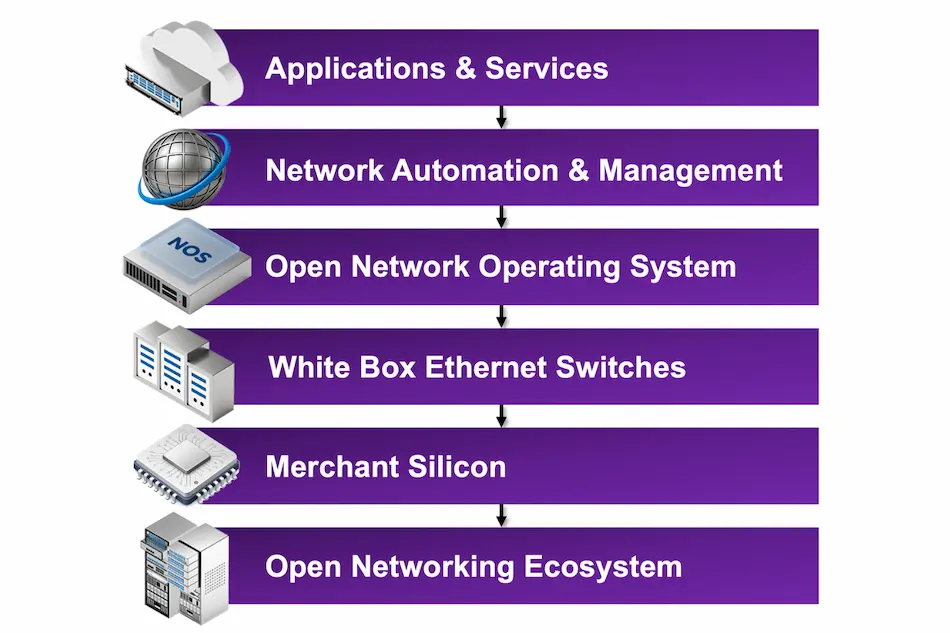
Unlike traditional networking, where hardware and software are tightly integrated into proprietary platforms, white box networking gives organizations greater control over network architecture and lifecycle management. Businesses can avoid vendor lock-in, adopt new technologies more quickly, and leverage open standards to build modern, programmable infrastructure that evolves with changing business needs.
A key technology enabling this transformation is the SONiC network operating system (Software for Open Networking in the Cloud). Originally developed for hyperscale environments, SONiC has become one of the leading open network operating systems for enterprise, cloud, and service provider deployments. Combined with modern network automation, telemetry, and programmable APIs, SONiC helps organizations simplify operations while delivering the flexibility and performance required for today’s demanding workloads, including AI networking, enterprise data centers, and cloud environments.
Why Organizations Are Moving to Open Networking
Organizations across enterprise, cloud, telecommunications, and cloud infrastructure environments are increasingly adopting open networking to build networks that are more flexible, scalable, and cost-efficient than traditional proprietary architectures.
By embracing white box infrastructure and vendor-neutral networking, businesses gain the freedom to select best-of-breed hardware and software without being tied to a single vendor’s roadmap. This disaggregated approach reduces capital and operating costs, simplifies future hardware refreshes, and allows organizations to adopt the latest innovations as they become available.
Open platforms such as the SONiC network operating system also enable greater network automation, allowing teams to standardize deployments, automate configuration and lifecycle management, and improve operational consistency across distributed environments. As organizations continue modernizing their infrastructure, automation has become essential for supporting increasingly complex networks.
The rapid growth of AI workloads, cloud services, and data-intensive applications has further accelerated the shift toward open networking solutions. Modern environments require scalable, programmable networks capable of supporting high-performance connectivity while remaining adaptable to future technologies. By combining white box networking, merchant silicon, and open software ecosystems, organizations can build resilient, future-ready infrastructure that supports everything from enterprise campuses to hyperscale data centers and AI networking deployments.
Core Concepts
Explore the six core concepts shaping modern open networking—from white box infrastructure and the SONiC network operating system to disaggregated networking, merchant silicon, and network automation.

Learn how white box networking enables flexible, open infrastructure.
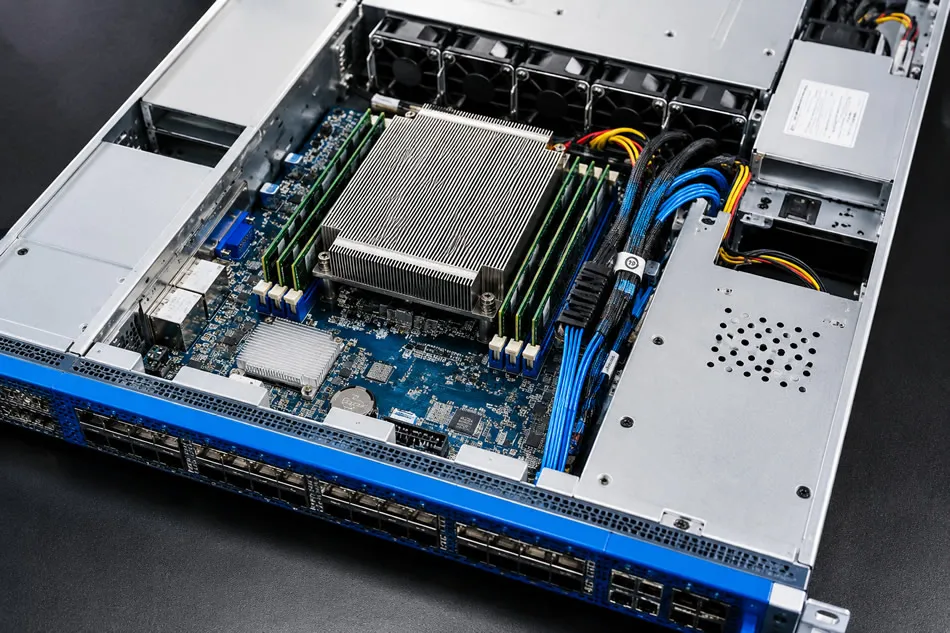
Discover how SONiC powers scalable, vendor-neutral networking.

Explore how disaggregated networking simplifies infrastructure design.

See how automation streamlines modern network operations.

Understand how open networking reduces vendor lock-in.

See how organizations deploy open networking in production.
Benefits of Open Networking
As organizations modernize their IT environments, open networking has become a preferred approach for building flexible, scalable, and cost-effective infrastructure. By combining white box infrastructure, merchant silicon, and an open network operating system such as the SONiC network operating system, organizations gain greater control over their network architecture while reducing dependence on proprietary solutions.
Unlike traditional networking, disaggregated networking allows hardware and software to evolve independently, enabling businesses to adopt new technologies faster, simplify network automation, and build vendor-neutral networking environments that are ready for future growth.
| Category | Traditional Proprietary Networking | Open Networking |
|---|---|---|
| Hardware & Software | Hardware and software are tightly integrated from one vendor. | White box infrastructure separates hardware and software, giving organizations greater flexibility. |
| Vendor Choice | Organizations are typically tied to one vendor’s ecosystem and roadmap. | Vendor-neutral networking allows organizations to select best-of-breed hardware, software, and management tools. |
| Scalability | Scaling often requires expanding within the same proprietary platform. | Disaggregated networking makes it easier to scale infrastructure while adopting new technologies over time. |
| Network Operating System | Uses proprietary network operating systems with limited flexibility. | Deploy an open network operating system such as the SONiC network operating system across compatible hardware. |
| Hardware Innovation | Hardware refresh cycles depend on a single vendor. | Merchant silicon enables faster innovation and a wider choice of networking platforms. |
| Automation | Automation capabilities may be limited to proprietary tools. | Built for network automation, programmable APIs, telemetry, and Infrastructure-as-Code workflows. |
| Cost of Ownership | Higher licensing and hardware costs can increase long-term TCO. | White box networking helps reduce total cost of ownership while maintaining enterprise performance. |
| Future Flexibility | Infrastructure changes often require major platform migrations. | Open networking provides a flexible foundation that evolves with business and technology requirements. |
Want to learn more? Explore our resources on white box networking, Enterprise SONiC, and network total cost of ownership to see how organizations are deploying open networking in production environments.
How Open Networking Works
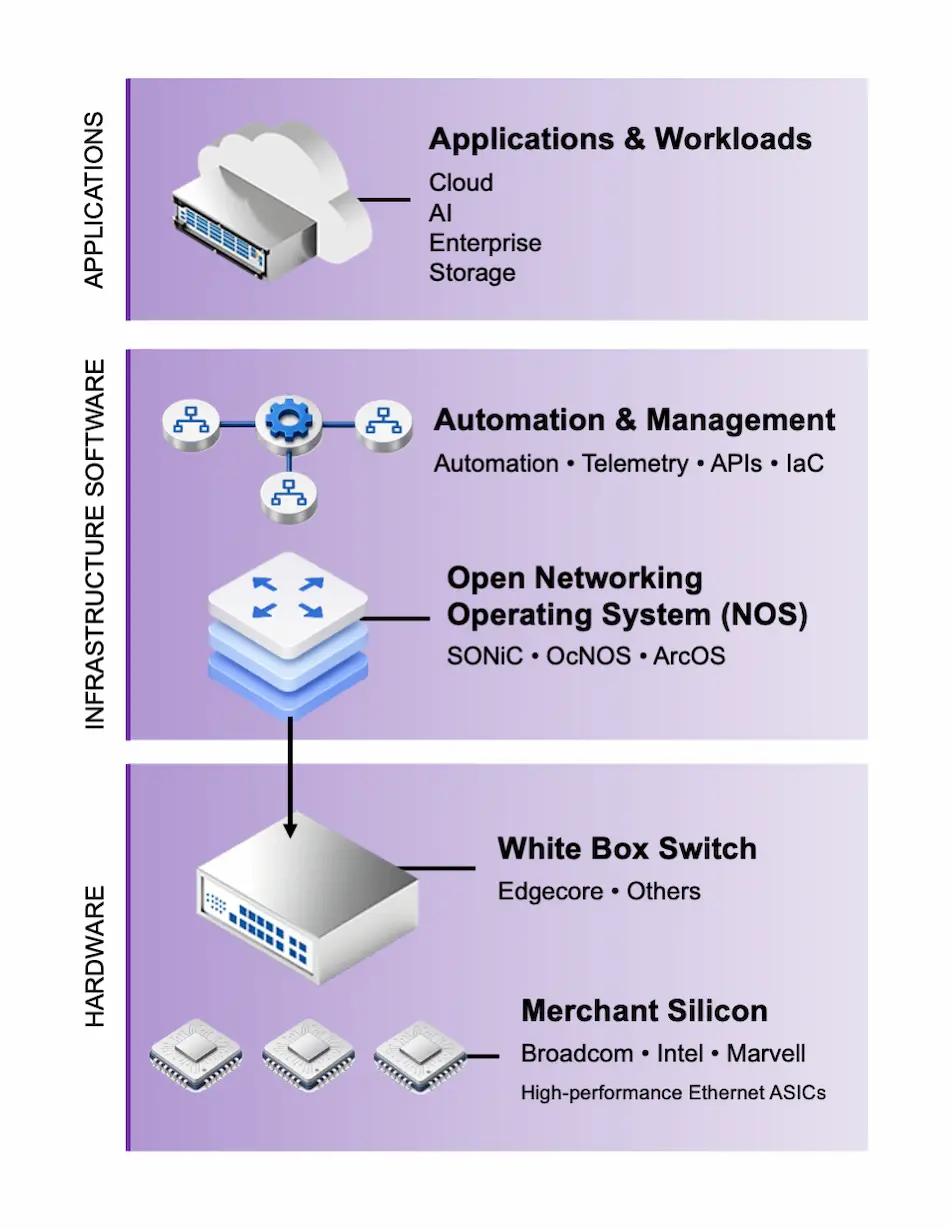
An open networking architecture separates applications, platform software, and hardware into independent layers. Within the software layer, organizations can deploy an open network operating system (NOS) alongside automation and management tools. This disaggregated approach enables organizations to choose best-of-breed technologies without being tied to a single vendor.
From the bottom up, each layer plays a distinct role:
- Merchant Silicon – High-performance switching ASICs that provide the foundation for modern Ethernet networking.
- White Box Switches – Open hardware platforms that separate hardware from software, increasing flexibility and hardware choice.
- SONiC Network Operating System – An open network operating system that runs on compatible white box switches, delivering enterprise networking features across multiple hardware platforms.
- Network Automation & Management – APIs, telemetry, orchestration, and Infrastructure-as-Code tools that simplify deployment and ongoing operations.
- Applications & Workloads – AI, cloud, enterprise, and data center workloads that run on top of the network.
Together, these independent layers create a flexible, vendor-neutral networking platform where hardware, software, and automation can evolve independently—making networks easier to scale, automate, and modernize than traditional proprietary solutions.
Resource Library
Breaking Free: The Virtues of Whitebox Infrastructure | Explores how white box infrastructure increases flexibility, reduces vendor lock-in, and simplifies long-term network growth.
SONiC Boom: Leveraging Open Source and Merchant Silicon for Today’s Scalable Network Infrastructures | Explores how SONiC and merchant silicon enable scalable, vendor-neutral networking for modern enterprise and cloud environments.
SONiC: The Enterprise-Grade Secure OS for Modern Digital Infrastructure | Explains how Enterprise SONiC combines security, automation, and flexibility to power modern open networking deployments.
Simplifying Open Infrastructure with Edgecore Networks | Demonstrates how open networking simplifies infrastructure design through disaggregated hardware, software, and automation.
The Bargain Whitebox Switch That Looked Like a Win—Until Year Three | Examines how hardware quality and lifecycle costs affect the long-term value of white box networking investments.
What the heck is ‘Cognitive Routing’? | Introduces cognitive routing and explains how intelligent traffic optimization improves modern network performance and resilience.
Enterprise SONiC by Broadcom | Explores how Enterprise SONiC delivers enterprise-grade security, automation, and scalability for modern open networking deployments.
Total Cost of Ownership (TCO) | Analysis of infrastructure efficiency, scalability, and cost optimization for modern AI environments.
All Whiteboxes are NOT the SAME | Examines the hardware differences that impact the reliability, performance, and long-term value of white box infrastructure.
WhiteBox Switching and Security | Explains how zero trust principles and Enterprise SONiC strengthen security across modern white box networking environments.
Network Definitions | Defines essential networking terminology, technologies, and concepts to help build a strong foundation in open networking.
600 Networks. One NOS. Zero Vendor Lock-in. | Learn how a unified network operating system simplifies operations while reducing vendor lock-in across large-scale deployments.
The Programmable Disaggregated Network Operating Environment | See how programmable, disaggregated networking delivers greater automation, flexibility, and control for modern AI infrastructure.
Powering Enterprise Open Networking with SONiC | Discover how Edgecore and Enterprise SONiC combine open hardware and software to build scalable, production-ready AI networks.
Is a vertically integrated networking solution from a single vendor your only option? | Compares proprietary networking with open networking to demonstrate the advantages of disaggregated infrastructure and vendor choice.
Build Smarter Networks with the Aviz End-to-End Stack | Demonstrates how automation, observability, and AI-powered management simplify modern open networking operations.
Leveraging Edgecore Open Networking Platforms for Next-Generation Carrier Networks | Explores how open networking platforms help service providers build scalable, programmable carrier network infrastructure.
Unlock Innovation with Edgecore Community SONiC Distribution | Shows how organizations accelerate innovation using Community SONiC on open networking hardware platforms.
Broadcom SONiC X Edgecore Data Center Switch | Highlights a successful deployment combining Enterprise SONiC and Edgecore switches for modern data center networking.
LINX Selects Edgecore Networks and IP Infusion for LON2 LAN Refresh | Demonstrates how a major internet exchange modernized its infrastructure using open networking and disaggregated solutions.
Edgecore deployed an OpenFlow-based global SDN in NCTU | Highlights a successful SDN deployment showcasing programmable networking and centralized network management.
IPNexia Powers Datacenter with Edgecore Networks and Deca Consulting | Demonstrates how open networking improved data center scalability, flexibility, and operational efficiency.