What is data center modernization?
Data center modernization is the process of upgrading and transforming data center infrastructure to improve performance, scalability, efficiency, and operational agility. Rather than simply replacing aging hardware, modernization involves evaluating every layer of the data center—including compute, networking, storage, management, and automation—to better support today’s business requirements and emerging technologies.
Modern data centers must support a growing mix of workloads, from virtualization and cloud-native applications to artificial intelligence (AI), high-performance computing (HPC), and data-intensive analytics. As organizations continue to adopt hybrid cloud strategies and deploy increasingly complex applications, legacy infrastructure often struggles to provide the flexibility, bandwidth, and operational efficiency these environments require.
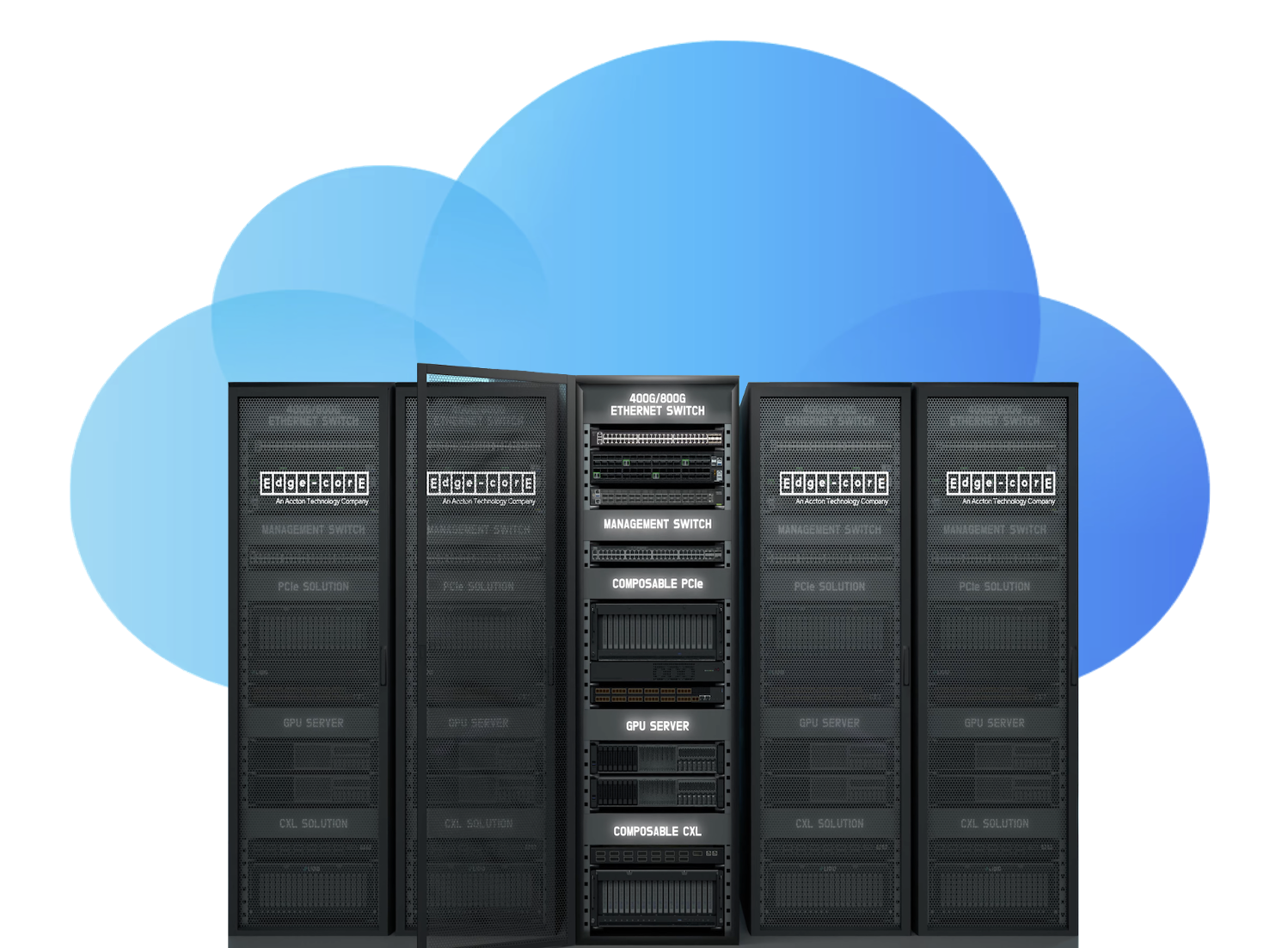
Successful data center modernization combines modern hardware, intelligent software, and automated operations to create infrastructure that is scalable, resilient, and easier to manage. Technologies such as high-speed Ethernet, open networking, infrastructure automation virtualization, and AI-ready architectures enable organizations to reduce complexity, improve resource utilization, and prepare their data centers for future growth.
Rather than being a one-time technology refresh, data center modernization is an ongoing strategy that helps organizations continuously adapt to evolving business needs, changing application requirements, and rapid advances in digital infrastructure.
Why organizations are modernizing their data centers
Organizations are modernizing their data centers to support faster business growth, improve operational efficiency, and prepare for increasingly demanding workloads. Traditional infrastructure was designed for relatively predictable enterprise applications, but today’s environments must accommodate cloud computing, AI, virtualization, edge computing, and rapidly growing data volumes while maintaining high availability and performance.
Modernization enables organizations to replace siloed infrastructure with more flexible, scalable architectures that simplify operations and accelerate the deployment of new technologies. By investing in infrastructure automation, software-defined management, high-performance networking, and intelligent monitoring, IT teams can reduce manual administration, improve reliability, and respond more quickly to changing business demands.
Many organizations are also modernizing to improve energy efficiency, reduce total cost of ownership (TCO), simplify infrastructure lifecycle management, and increase operational resilience. Technologies such as open networking, merchant silicon, and programmable network operating systems help support these objectives while giving organizations greater flexibility when planning future infrastructure investments.
As digital transformation continues across every industry, data center modernization has become a long-term business strategy rather than a periodic infrastructure upgrade. Organizations that modernize proactively are better positioned to scale efficiently, adopt emerging technologies with confidence, and build resilient, future-ready data centers capable of supporting tomorrow’s applications.
Core Concepts
Explore the six core concepts shaping modern data center modernization—from infrastructure architecture and hybrid cloud to automation, high-performance networking, scalability, and energy efficiency.
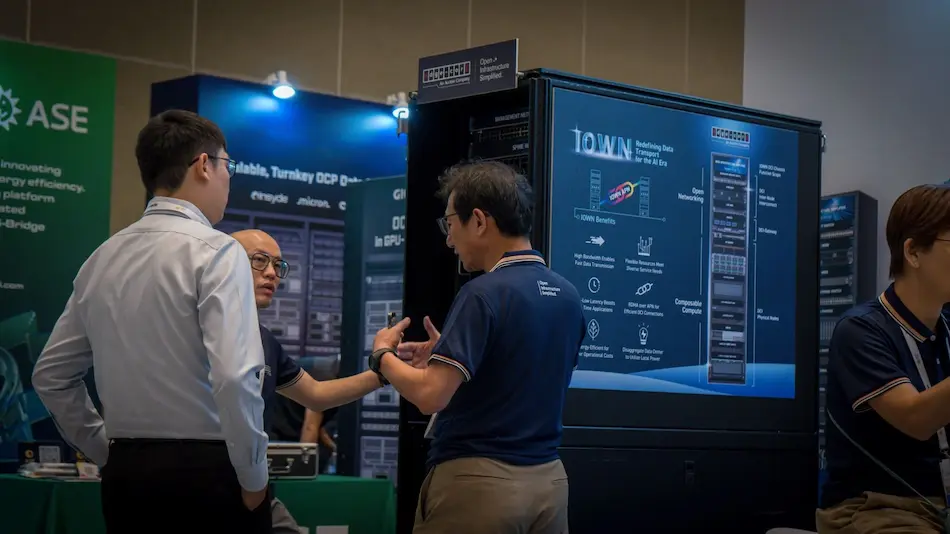
Learn how modern architectures improve scalability, flexibility, and operational efficiency.

Learn how scalable infrastructure maximizes performance while reducing operational complexity.
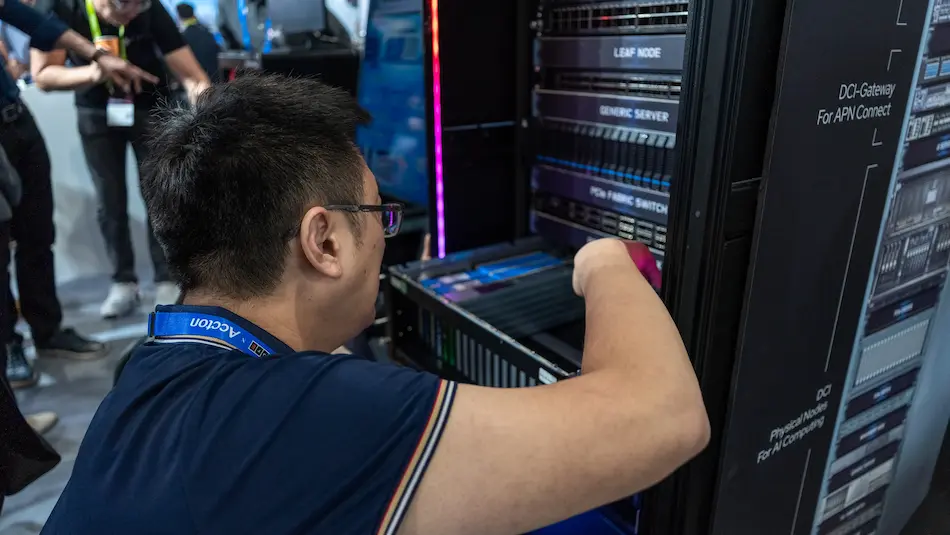
Explore how automation simplifies operations and improves infrastructure management.

Understand how modern networking supports cloud, AI, and high-performance workloads.
Discover how hybrid cloud improves workload placement, flexibility, and business agility.
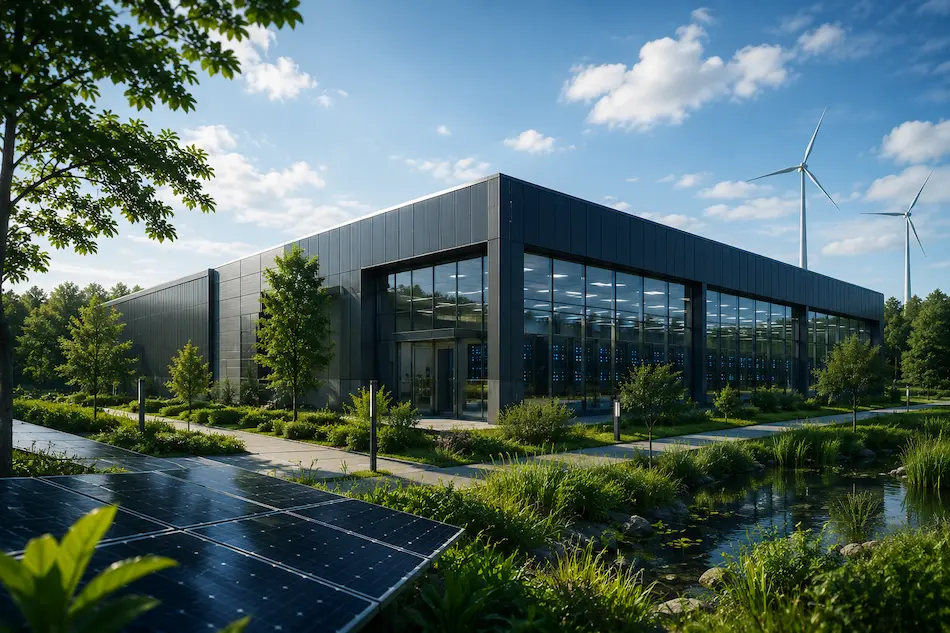
Discover strategies for building more sustainable and energy-efficient data centers.
Benefits of Data Center Modernization
Modernizing a data center enables organizations to improve performance, scalability, operational efficiency, and long-term flexibility while supporting increasingly demanding workloads. Rather than maintaining siloed, aging infrastructure, organizations are adopting modern architectures that simplify operations, automate routine tasks, and better accommodate cloud, AI, and data-intensive applications.
A modernized data center also helps reduce infrastructure complexity, improve resource utilization, and prepare organizations for future growth. By investing in scalable technologies, infrastructure automation, and efficient infrastructure, businesses can respond more quickly to changing requirements while lowering operational costs and improving overall resiliency.
Traditional Data Center vs. Modern Data Center
| Category | Traditional Data Center | Modern Data Center |
|---|---|---|
| Infrastructure | Standalone, siloed systems with limited flexibility. | Integrated, scalable infrastructure designed for evolving workloads. |
| Workloads | Optimized primarily for traditional enterprise applications. | Supports cloud-native applications, AI, virtualization, HPC, and hybrid workloads. |
| Scalability | Scaling often requires significant hardware upgrades and manual planning. | Modular architectures allow infrastructure to scale more efficiently as demand grows. |
| Operations | Manual provisioning, monitoring, and lifecycle management. | Infrastructure automation simplifies deployment, management, and ongoing operations. |
| Networking | Lower-speed networks designed for predictable traffic patterns. | High-performance networking supports cloud, AI, and east-west traffic at scale. |
| Resource Utilization | Compute, storage, and networking resources are often underutilized. | Optimized resource utilization improves performance and infrastructure efficiency. |
| Energy Efficiency | Higher power consumption and less efficient cooling strategies. | Energy-efficient infrastructure helps reduce power usage and operating costs. |
| Business Agility | Slower deployment of new services and technologies. | Faster adoption of new applications, cloud services, and emerging technologies. |
Modern data center infrastructure is built to support continuous innovation rather than periodic technology refreshes. As organizations modernize, many also adopt technologies such as open networking, white box infrastructure, high-performance Ethernet, and AI-ready networking to further improve scalability, operational efficiency, and long-term flexibility.
Want to learn more? Explore our resources on open networking and white box infrastructure, AI networking and GPU fabrics, and our network total cost of ownership white paper to see how organizations are building scalable, efficient, and future-ready data centers.
Modern Data Center Architecture
Modern data centers integrate compute, storage, networking, automation, and physical infrastructure into a unified architecture designed for scalability, operational efficiency, and evolving workloads. Rather than relying on isolated systems, these interconnected layers enable organizations to support cloud services, AI, virtualization, and future technology growth with greater flexibility.
The diagram below illustrates the core layers that work together to power a modern, scalable data center.
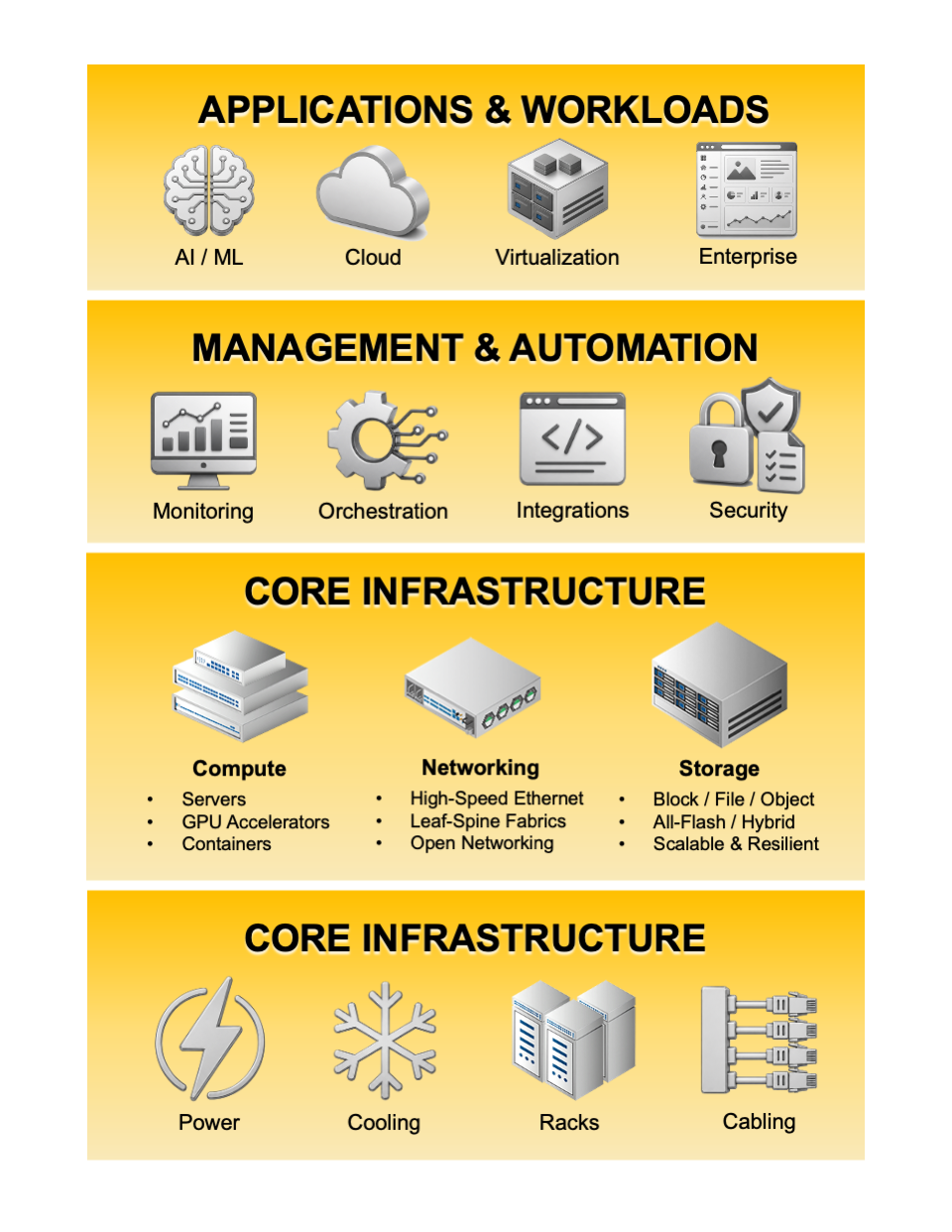
Modern data center architectures are strengthened by technologies such as high-performance Ethernet, open networking, and infrastructure automation.
Real-World Modernization Success
See how organizations across industries are modernizing their infrastructure to improve performance, scalability, operational efficiency, and connectivity.
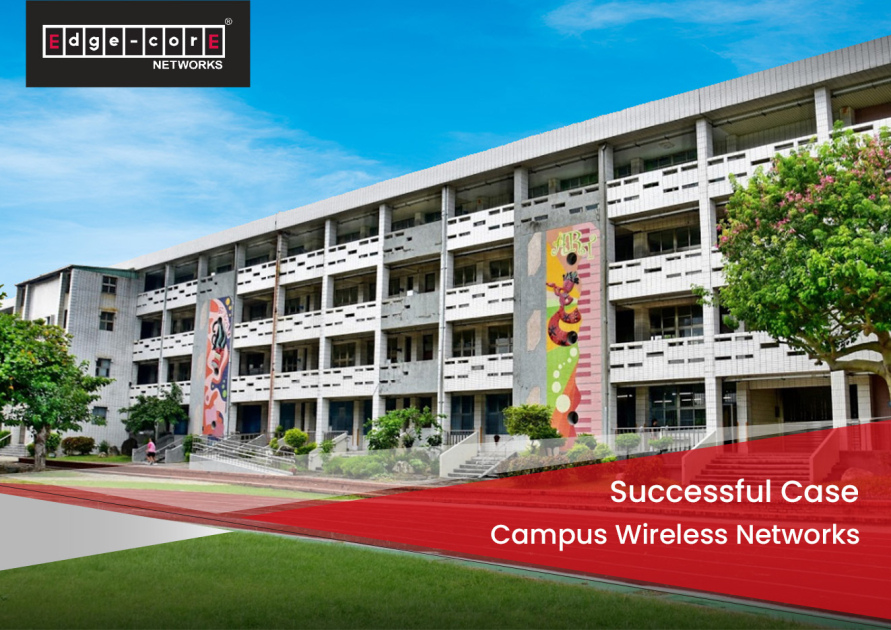
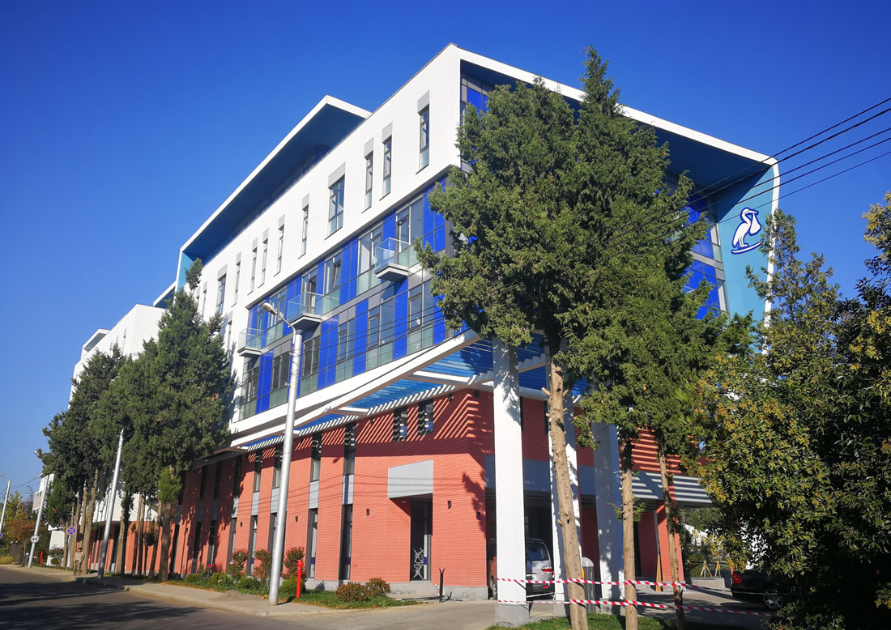
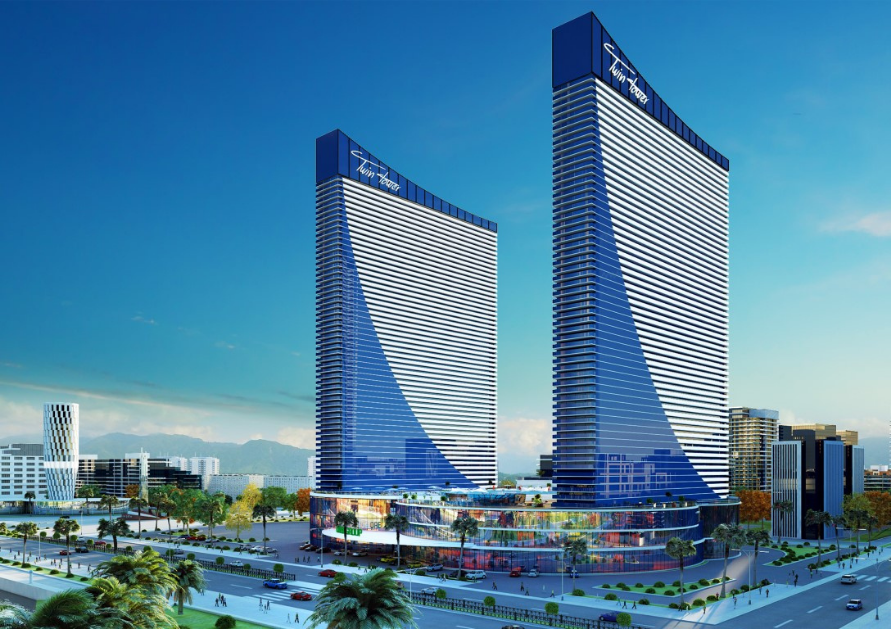
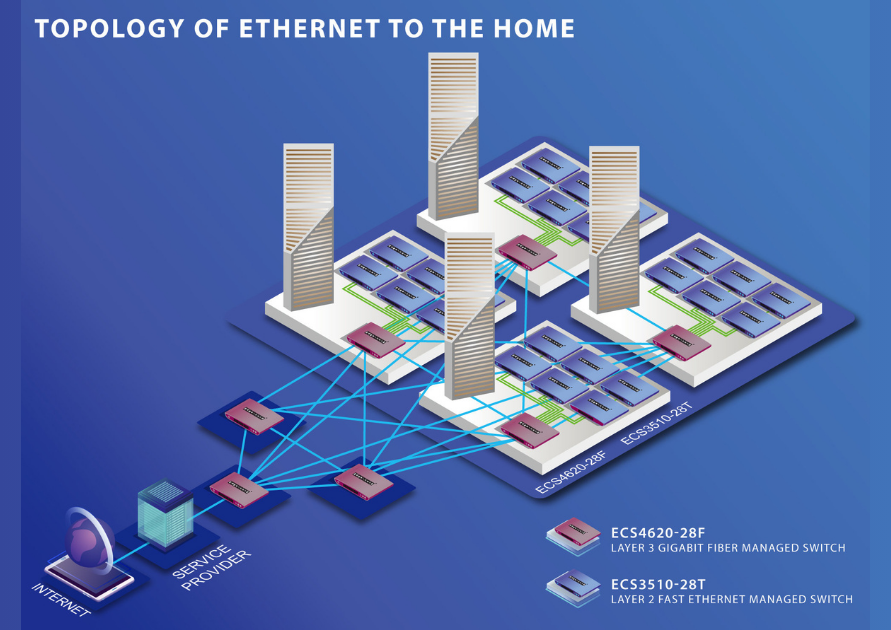

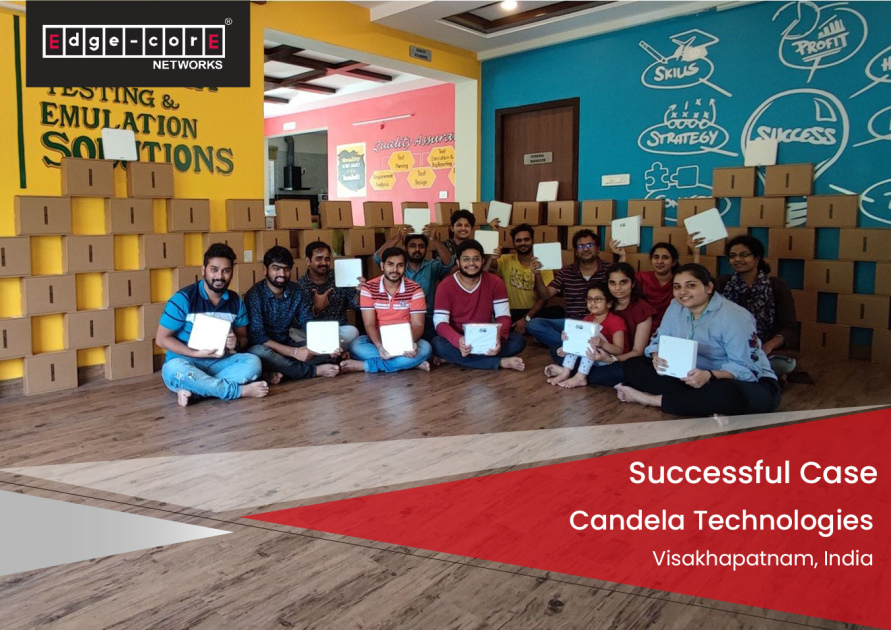
Looking for more examples? Explore our full library of case studies to see how organizations around the world are deploying modern infrastructure solutions across enterprise, cloud, service provider, and AI networking environments.
Resource Library
A Joint Field Validation of Distributed AI Inference over IOWN-based Distributed Data Centers | Validation of distributed AI inference across next-generation data center architectures.
Total Cost of Ownership (TCO) | Analysis of infrastructure efficiency, scalability, and cost optimization for modern AI environments.
Network Definitions | Reference guide to essential networking terms and technologies for modern infrastructure.
Building High Density, Power Efficient, Sustainable Data Center Networks with Edgecore Solutions | Best practices for building high-density, power-efficient, and scalable data center networks.
Networking Solutions for Telecom & Service Providers | Modern networking strategies for telecom and service provider infrastructure.
Future-Ready Networks | Strategies for modernizing enterprise infrastructure through smarter network migration.
High-Performance Broadband Aggregation | Designing scalable broadband aggregation networks for edge connectivity.
Operation Resiliency | Improve infrastructure resiliency for mission-critical enterprise and cloud environments.
Cloud Data Center Solutions | Learn how modern cloud data center solutions improve scalability and operational efficiency.
Event Connectivity with OpenWiFi | Delivering reliable, high-density wireless connectivity for large-scale events.
High-Bandwidth Broadband Deployment | Deploying scalable Ethernet broadband services for residential connectivity.
Campus Networking Across 275 Schools | Modernizing education infrastructure with reliable campus-wide connectivity.
Smart City Infrastructure Deployment | Modern Layer 3/Layer 2 networking for municipal infrastructure modernization.
Hotel CCTV Network Modernization | High-performance network infrastructure supporting secure surveillance systems.
Healthcare Connectivity Solutions | Reliable wired and wireless infrastructure for modern healthcare environments.
From Building Blocks to Solutions: A Turnkey Open Infrastructure Solution for Enterprise AI | Breaks down how modular, open networking components come together to deliver a complete, turnkey infrastructure for enterprise AI deployments.
Simplifying Open Infrastructure with Edgecore Networks | Demonstrates how open networking simplifies infrastructure design through disaggregated hardware, software, and automation.
SONiC: The Enterprise-Grade Secure OS for Modern Digital Infrastructure | Explains how Enterprise SONiC combines security, automation, and flexibility to power modern open networking deployments.
The Bargain Whitebox Switch That Looked Like a Win—Until Year Three | Examines how hardware quality and lifecycle costs affect the long-term value of white box networking investments.