
What is Open Networking?
Open networking is an approach to designing and operating network infrastructure that separates networking hardware from the software that runs it. Instead of relying on proprietary, vertically integrated systems from a single vendor, organizations can combine ホワイトボックスインフラストラクチャ, 商用シリコン, and an open network operating system such as the SONiC network operating system to build flexible, scalable, and cost-effective networks.
At the heart of オープンネットワーキング is 分散型ネットワーク—the ability to independently choose hardware, network operating systems, and management tools that best fit an organization’s requirements. This enables businesses to deploy white box switches alongside their preferred software while simplifying upgrades, expanding vendor choice, and accelerating innovation.
Components of Open Networking
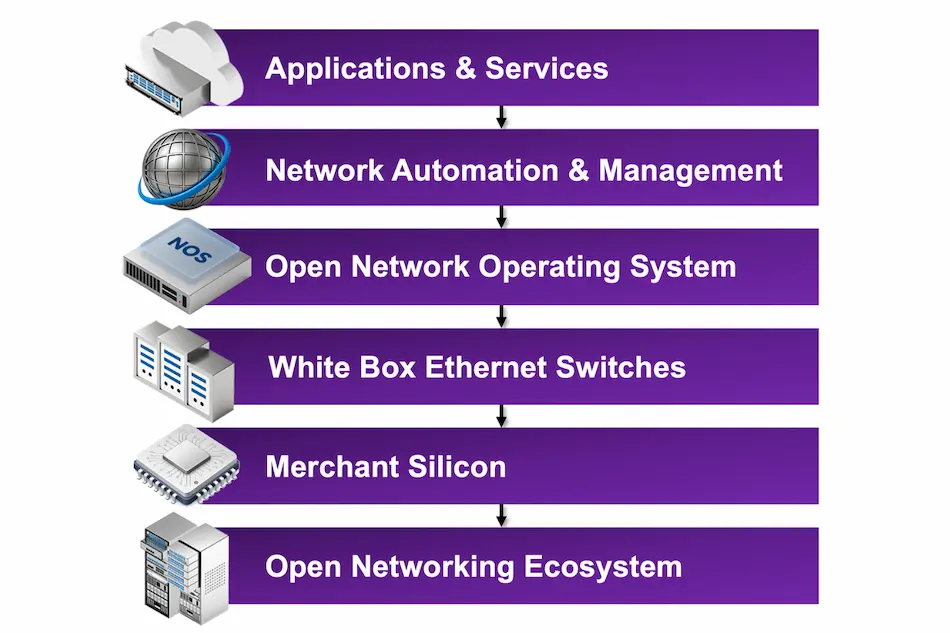
Unlike traditional networking, where hardware and software are tightly integrated into proprietary platforms, white box networking gives organizations greater control over network architecture and lifecycle management. Businesses can avoid vendor lock-in, adopt new technologies more quickly, and leverage open standards to build modern, programmable infrastructure that evolves with changing business needs.
A key technology enabling this transformation is the SONiC network operating system (Software for Open Networking in the Cloud). Originally developed for hyperscale environments, SONiC has become one of the leading open network operating systems for enterprise, cloud, and service provider deployments. Combined with modern network automation, telemetry, and programmable APIs, SONiC helps organizations simplify operations while delivering the flexibility and performance required for today’s demanding workloads, including AI networking, enterprise data centers, and cloud environments.
Why Organizations Are Moving to Open Networking
Organizations across enterprise, cloud, telecommunications, and cloud infrastructure environments are increasingly adopting オープンネットワーキング to build networks that are more flexible, scalable, and cost-efficient than traditional proprietary architectures.
By embracing ホワイトボックスインフラストラクチャ そして vendor-neutral networking, businesses gain the freedom to select best-of-breed hardware and software without being tied to a single vendor’s roadmap. This disaggregated approach reduces capital and operating costs, simplifies future hardware refreshes, and allows organizations to adopt the latest innovations as they become available.
Open platforms such as the SONiC network operating system also enable greater network automation, allowing teams to standardize deployments, automate configuration and lifecycle management, and improve operational consistency across distributed environments. As organizations continue modernizing their infrastructure, automation has become essential for supporting increasingly complex networks.
The rapid growth of AI workloads, cloud services, and data-intensive applications has further accelerated the shift toward open networking solutions. Modern environments require scalable, programmable networks capable of supporting high-performance connectivity while remaining adaptable to future technologies. By combining white box networking, 商用シリコン, and open software ecosystems, organizations can build resilient, future-ready infrastructure that supports everything from enterprise campuses to hyperscale data centers and AI networking deployments.
基本概念
Explore the six core concepts shaping modern open networking—from white box infrastructure and the SONiC network operating system to disaggregated networking, merchant silicon, and network automation.

Learn how white box networking enables flexible, open infrastructure.
Discover how SONiC powers scalable, vendor-neutral networking.

Explore how disaggregated networking simplifies infrastructure design.
See how automation streamlines modern network operations.

Understand how open networking reduces vendor lock-in.

See how organizations deploy open networking in production.
Benefits of Open Networking
As organizations modernize their IT environments, オープンネットワーキング has become a preferred approach for building flexible, scalable, and cost-effective infrastructure. By combining ホワイトボックスインフラストラクチャ, 商用シリコン, and an open network operating system such as the SONiC network operating system, organizations gain greater control over their network architecture while reducing dependence on proprietary solutions.
Unlike traditional networking, 分散型ネットワーク allows hardware and software to evolve independently, enabling businesses to adopt new technologies faster, simplify network automation, and build vendor-neutral networking environments that are ready for future growth.
| カテゴリ | Traditional Proprietary Networking | オープンネットワーキング |
|---|---|---|
| Hardware & Software | Hardware and software are tightly integrated from one vendor. | White box infrastructure separates hardware and software, giving organizations greater flexibility. |
| Vendor Choice | Organizations are typically tied to one vendor’s ecosystem and roadmap. | Vendor-neutral networking allows organizations to select best-of-breed hardware, software, and management tools. |
| スケーラビリティ | Scaling often requires expanding within the same proprietary platform. | Disaggregated networking makes it easier to scale infrastructure while adopting new technologies over time. |
| Network Operating System | Uses proprietary network operating systems with limited flexibility. | Deploy an open network operating system such as the SONiC network operating system across compatible hardware. |
| Hardware Innovation | Hardware refresh cycles depend on a single vendor. | 商用シリコン enables faster innovation and a wider choice of networking platforms. |
| Automation | Automation capabilities may be limited to proprietary tools. | Built for network automation, programmable APIs, telemetry, and Infrastructure-as-Code workflows. |
| Cost of Ownership | Higher licensing and hardware costs can increase long-term TCO. | White box networking helps reduce 総所有コスト while maintaining enterprise performance. |
| Future Flexibility | Infrastructure changes often require major platform migrations. | Open networking provides a flexible foundation that evolves with business and technology requirements. |
もっと詳しく知りたいですか? Explore our resources on white box networking, エンタープライズ SONiC、 そして ネットワークの総所有コスト to see how organizations are deploying open networking in production environments.
How Open Networking Works
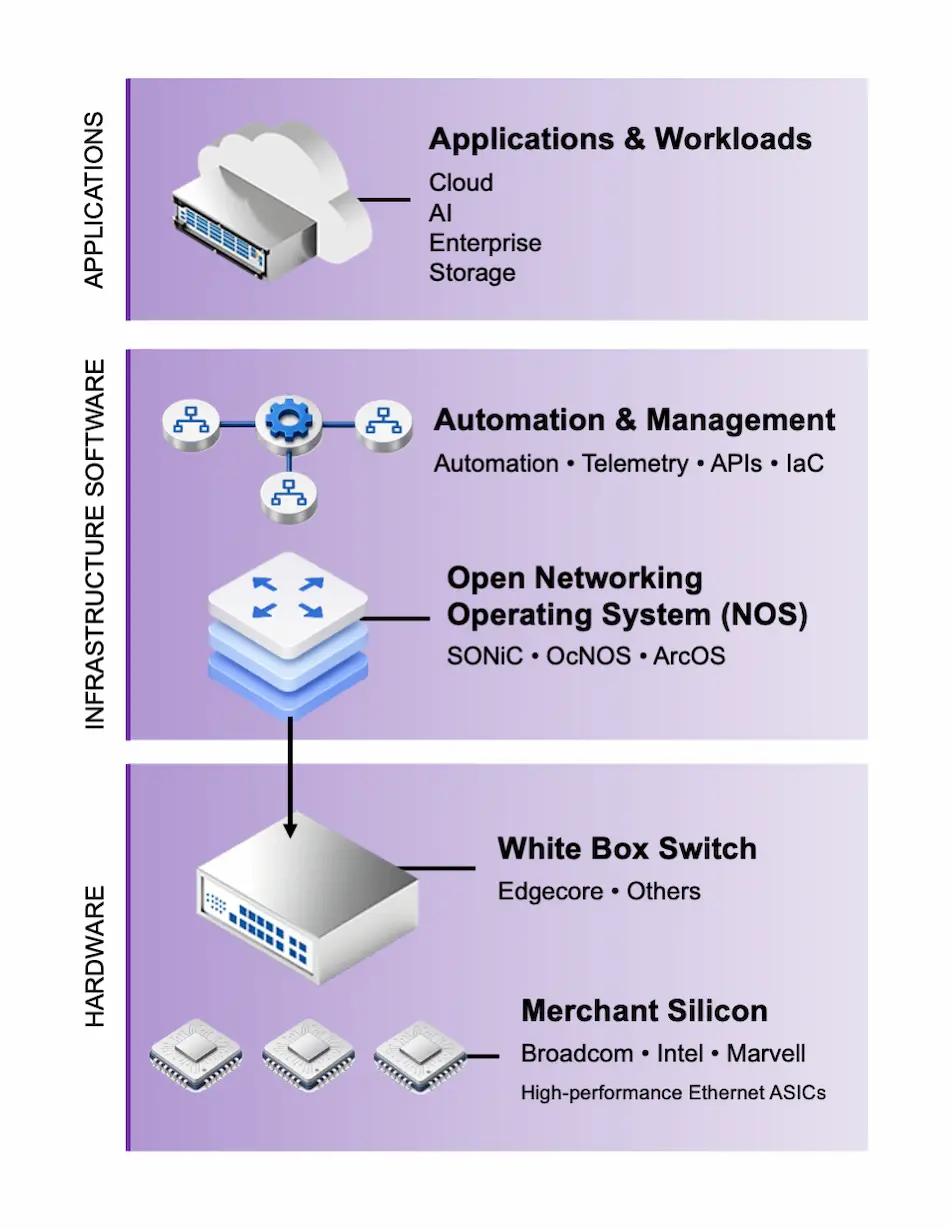
An open networking architecture separates applications, platform software, and hardware into independent layers. Within the software layer, organizations can deploy an open network operating system (NOS) alongside automation and management tools. This disaggregated approach enables organizations to choose best-of-breed technologies without being tied to a single vendor.
From the bottom up, each layer plays a distinct role:
- Merchant Silicon – High-performance switching ASICs that provide the foundation for modern Ethernet networking.
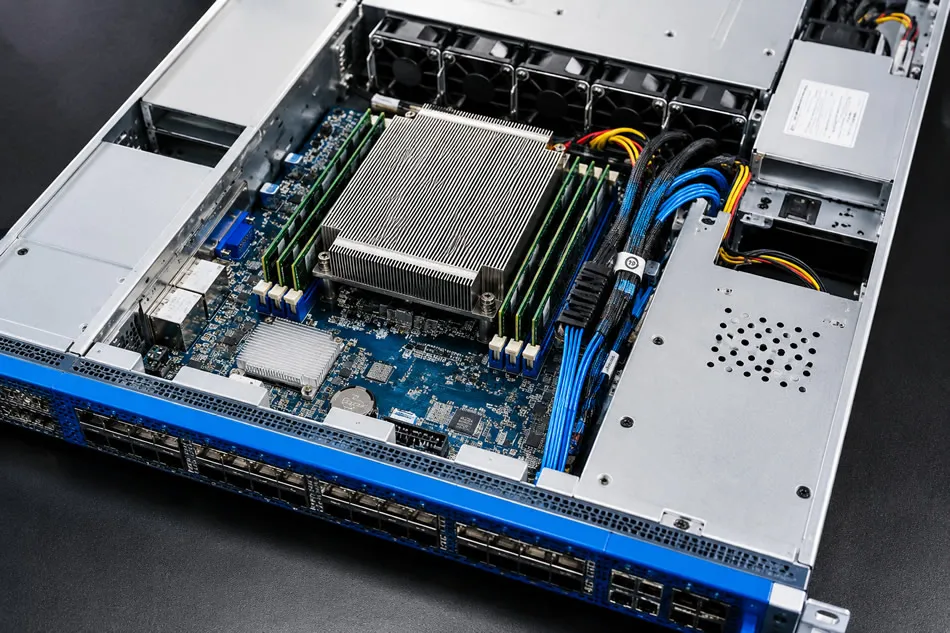
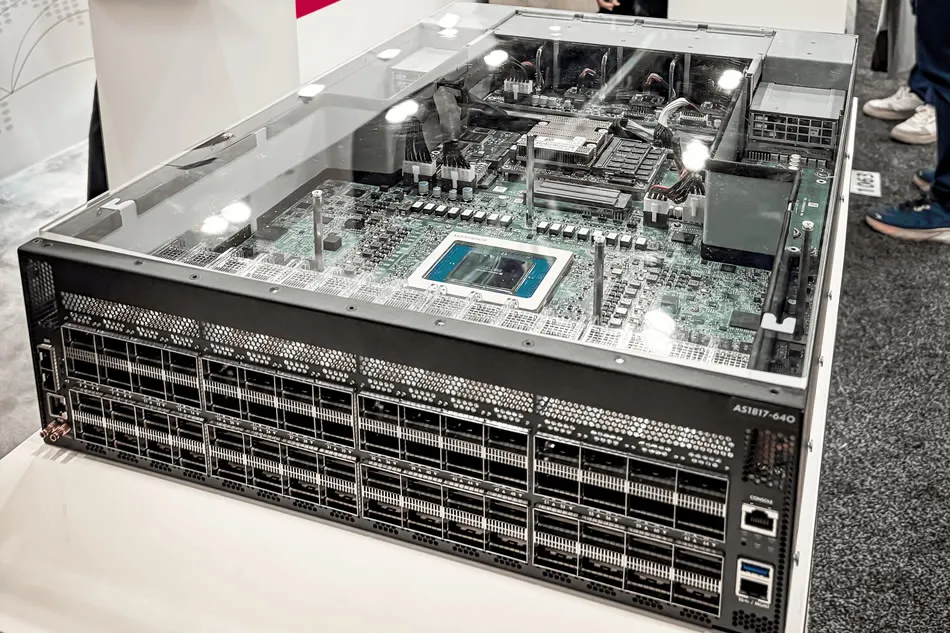
- White Box Switches – Open hardware platforms that separate hardware from software, increasing flexibility and hardware choice.
- SONiC ネットワークオペレーティングシステム – An open network operating system that runs on compatible white box switches, delivering enterprise networking features across multiple hardware platforms.
- Network Automation & Management – APIs, telemetry, orchestration, and Infrastructure-as-Code tools that simplify deployment and ongoing operations.
- Applications & Workloads – AI, cloud, enterprise, and data center workloads that run on top of the network.
Together, these independent layers create a flexible, vendor-neutral networking platform where hardware, software, and automation can evolve independently—making networks easier to scale, automate, and modernize than traditional proprietary solutions.
リソースライブラリ
自由への道: ホワイトボックス インフラストラクチャの利点 | Explores how white box infrastructure increases flexibility, reduces vendor lock-in, and simplifies long-term network growth.
SONiC Boom: Leveraging Open Source and Merchant Silicon for Today’s Scalable Network Infrastructures | Explores how SONiC and merchant silicon enable scalable, vendor-neutral networking for modern enterprise and cloud environments.
SONiC: 現代のデジタルインフラのためのエンタープライズグレードのセキュアOS Enterprise SONiCが、セキュリティ、自動化、柔軟性をどのように組み合わせ、最新のオープンネットワーク展開を支えるのかを説明します。.
Edgecoreネットワークによるオープンインフラストラクチャの簡素化 オープンネットワーキングが、ハードウェア、ソフトウェア、自動化を分離することで、インフラストラクチャ設計をいかに簡素化するかを示します。.
お買い得なホワイトボックススイッチは3年目までは成功のように見えた ハードウェアの品質とライフサイクルコストが、ホワイトボックスネットワーク投資の長期的な価値にどのように影響するかを検証します。.
What the heck is ‘Cognitive Routing’? | Introduces cognitive routing and explains how intelligent traffic optimization improves modern network performance and resilience.
Enterprise SONiC by Broadcom | Explores how Enterprise SONiC delivers enterprise-grade security, automation, and scalability for modern open networking deployments.
総所有コスト(TCO) 現代のAI環境におけるインフラの効率性、拡張性、およびコスト最適化に関する分析。.
All Whiteboxes are NOT the SAME | Examines the hardware differences that impact the reliability, performance, and long-term value of white box infrastructure.
ホワイトボックススイッチングとセキュリティ | Explains how zero trust principles and Enterprise SONiC strengthen security across modern white box networking environments.
ネットワーク定義 | Defines essential networking terminology, technologies, and concepts to help build a strong foundation in open networking.
600のネットワーク。1つのNOS。ベンダーロックインなし。. 統合ネットワークオペレーティングシステムが、大規模展開において運用を簡素化し、ベンダーロックインを軽減する方法を学びましょう。.
プログラマブルな分離型ネットワーク運用環境 プログラマブルで分散型のネットワークが、最新のAIインフラストラクチャに、より高度な自動化、柔軟性、および制御をもたらす方法をご覧ください。.
Powering Enterprise Open Networking with SONiC EdgecoreとEnterprise SONiCが、オープンなハードウェアとソフトウェアを組み合わせて、拡張性の高い、実運用可能なAIネットワークを構築する方法をご覧ください。.
単一ベンダーによる垂直統合型ネットワーク ソリューションが唯一の選択肢ですか? | Compares proprietary networking with open networking to demonstrate the advantages of disaggregated infrastructure and vendor choice.
Avizエンドツーエンドスタックでよりスマートなネットワークを構築 | Demonstrates how automation, observability, and AI-powered management simplify modern open networking operations.
次世代キャリアネットワーク向け Edgecore オープン ネットワーキング プラットフォームの活用 | Explores how open networking platforms help service providers build scalable, programmable carrier network infrastructure.
Edgecore コミュニティでイノベーションを解き放つ SONiC ディストリビューション | Shows how organizations accelerate innovation using Community SONiC on open networking hardware platforms.
Broadcom SONiC X Edgecore データセンタースイッチ | Highlights a successful deployment combining Enterprise SONiC and Edgecore switches for modern data center networking.
LINX、LON2 LAN 更新に Edgecore Networks と IP Infusion を選択 | Demonstrates how a major internet exchange modernized its infrastructure using open networking and disaggregated solutions.
EdgecoreはNCTUにOpenFlowベースのグローバルSDNを導入しました | Highlights a successful SDN deployment showcasing programmable networking and centralized network management.
IPNexia、Edgecore NetworksとDeca Consultingと提携してデータセンターを強化 | Demonstrates how open networking improved data center scalability, flexibility, and operational efficiency.