
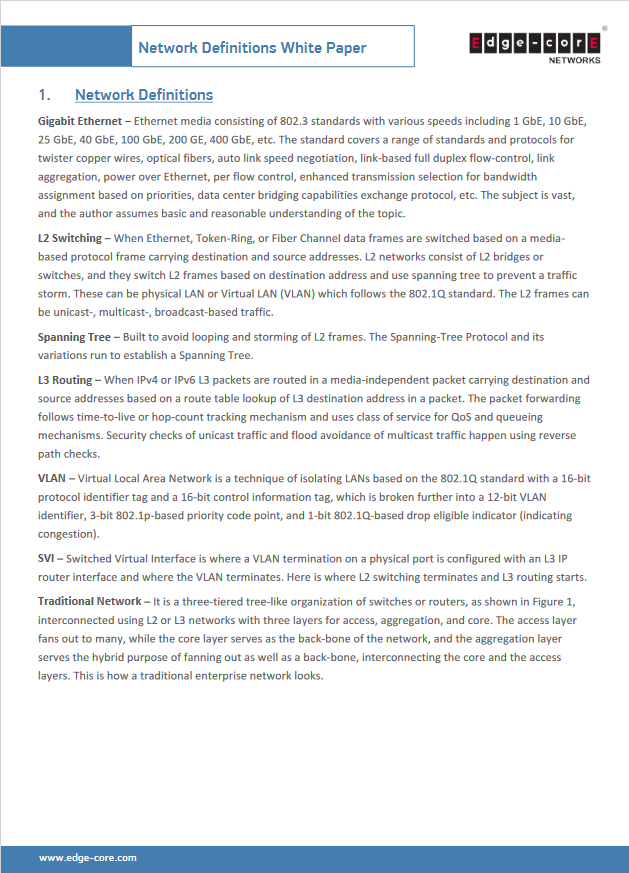
最新のデータセンター ネットワークの用語に精通していますか?
ネットワークインフラストラクチャが従来の3層階層からアジャイルへと進化するにつれて リーフアンドSpine アーキテクチャの進化に伴い、これらのシステムを定義する用語はますます複雑になっています。ネットワークエンジニア、アーキテクト、ITマネージャーのいずれであっても、従来の定義と次世代プロトコル間のギャップを埋めることは、導入を成功させる上で不可欠です。.
この包括的なホワイトペーパーは、, "「ネットワーク定義」" 権威ある用語集および技術ガイドとして機能します。ギガビットイーサネットとVLANの基本的な定義にとどまらず、今日のスケーラブルなファブリックを支える高度なメカニズムについても解説します。.
主なトピックは次のとおりです:
- 建築の変化: 従来のエンタープライズ ネットワーク (アクセス/集約/コア) とデータ センターのリーフおよび Spine トポロジ間の構造上の違いを理解します。.
- オーバーレイとアンダーレイVXLAN などのプロトコルを使用して、物理バックボーン (アンダーレイ) と仮想化トンネル (オーバーレイ) 間の関係を明確に定義します。.
- EVPN の詳細: ルート タイプ (RT-1 ~ RT-5)、指定フォワーダ (DF) の選択、エイリアシングなど、イーサネット仮想プライベート ネットワークについて詳しく説明します。.
- 高可用性: マルチシャーシ リンク アグリゲーション (MC-LAG) が標準 LAG を進化させて、独立したシャーシ全体に冗長性を提供する仕組みについて説明します。.
このガイドをダウンロードして、EVPN-VXLAN、BGP、ルーティング プロトコルの用語を習得し、次のインフラストラクチャ プロジェクトに必要な技術的な明確さを確保してください。.